


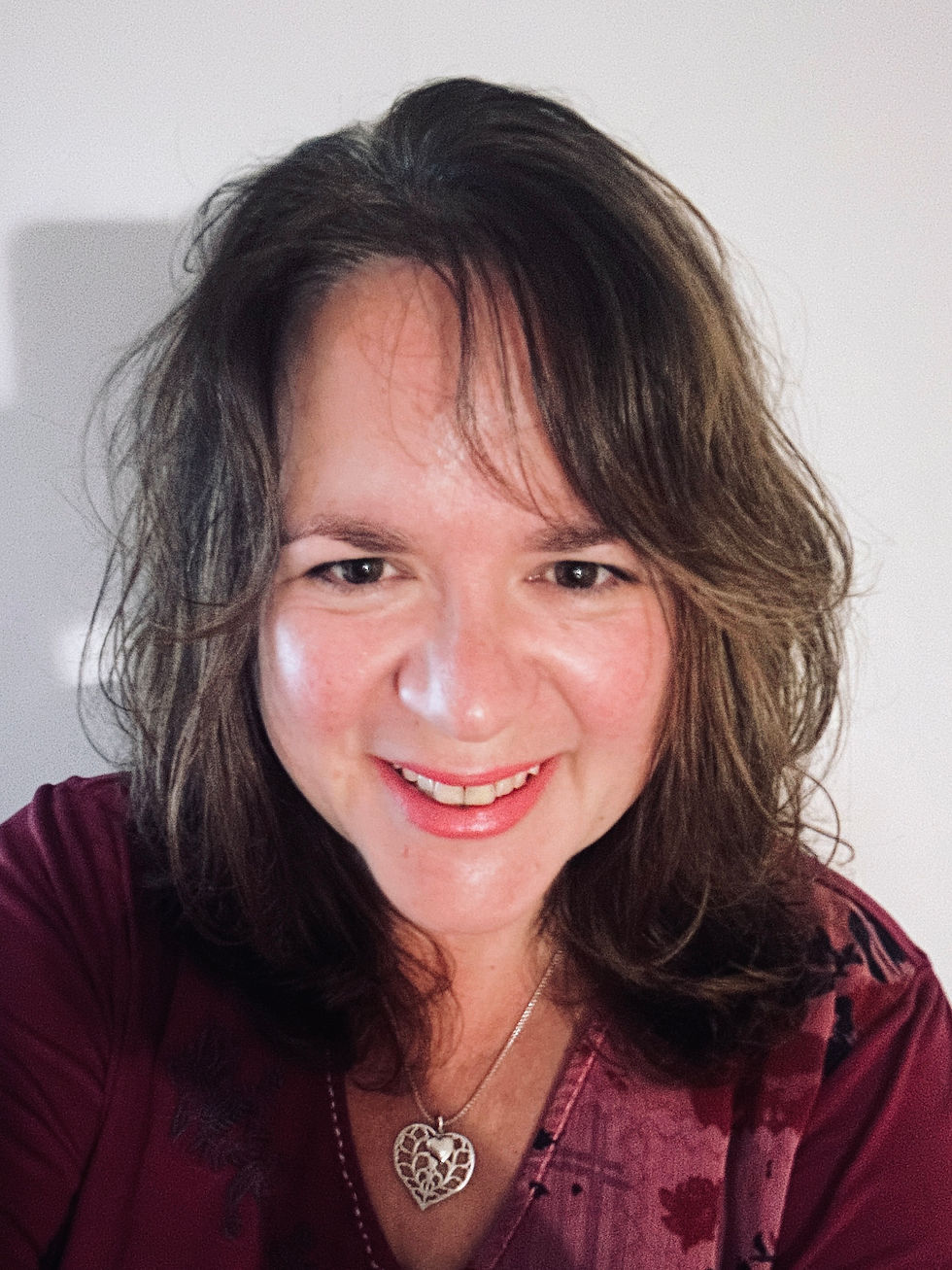
Claire Walker: "I’m always inspired by the experiences of women"

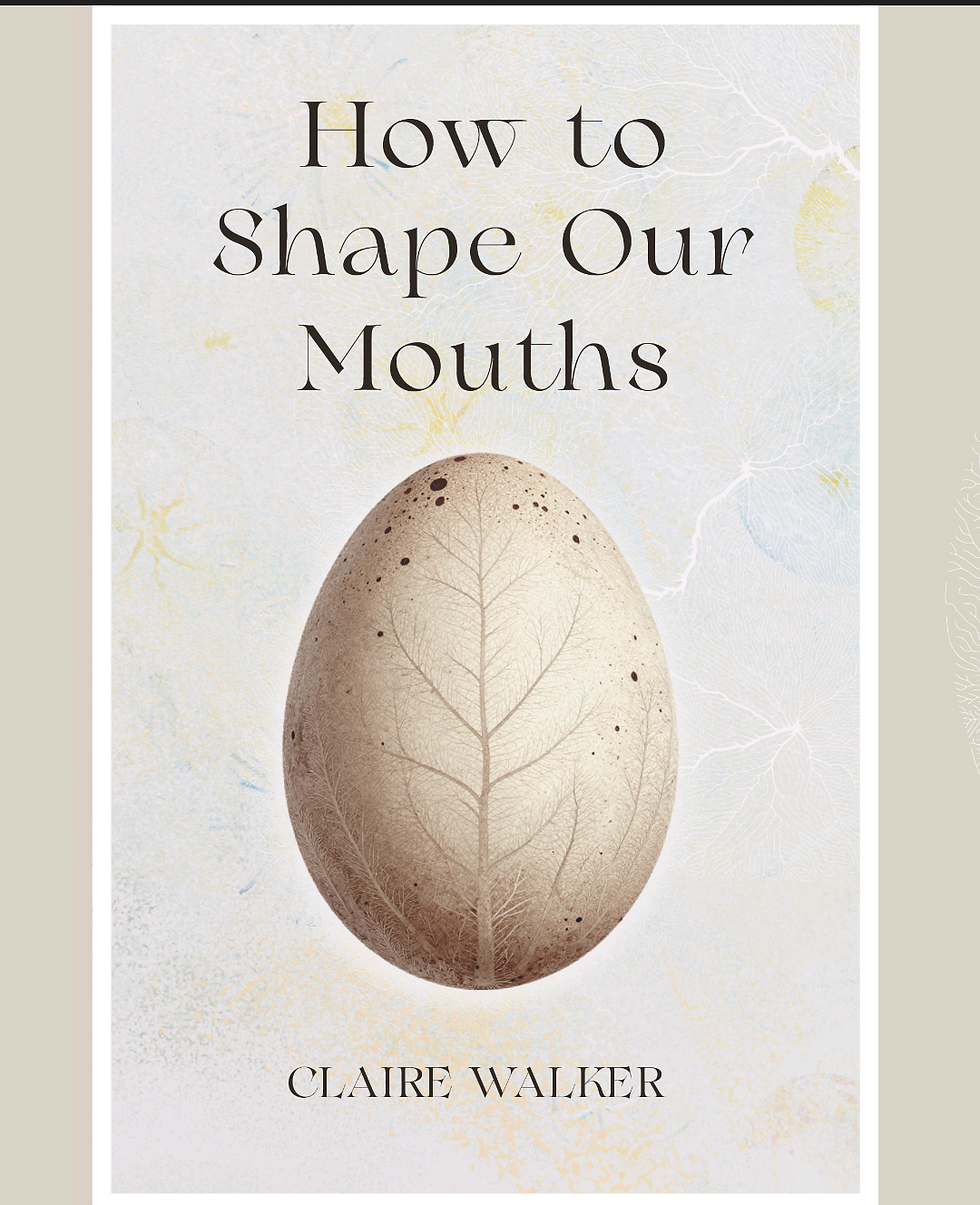
A chat with Claire Walker about her poetry pamphlet, How to Shape Our Mouths (Black Cat Poetry Press, 2026)
How would you describe How to Shape Our Mouths in one sentence?
The pamphlet is a mainly ekphrastic look at womanhood, particularly focusing on mother-daughter relationships.
How did you choose Black Cat Poetry Press as your publisher?
I’ve been a fan of Black Cat for a few years now, and particularly loved their publications by Bex Hainsworth, Corinna Board, and Benedicta Norell. Not only do I admire the poetry they publish, I also love the physical pamphlets themselves – the cover designs and production quality are beautiful. I’d been loosely working on a pamphlet when I saw that the press were open for submissions in October 2024, so decided that was the right time to pull the pamphlet together properly, and submit to them during that window.
How did you come up with the title?
‘How to shape our mouths’ is taken from a line in one of the poems ('Unzipped'). It felt appropriate to have as the title of the pamphlet as I’ve realised that a lot of what I write is about having / finding a voice, or trying to puzzle out the concept of ‘voice’ (and how we can use voice, either individually or collectively). I think this is something I think about more as I get older.
What was the inspiration for the book?
More than any of my previous books, visual art has provided much of the inspiration for this pamphlet. I’m particularly interested in how visual art can be used to inform fictional narrative – two short narrative sequences, and several of the standalone poems in the pamphlet have been directly inspired by interacting with visual art.

You’re an editor as well as a writer. What’s the relationship between the two – does one inspire or enable the other?
I think they can definitely work in tandem. It’s always inspiring to read other poets’ work, be that as an editor or as a reading-for-pleasure reader.
It’s interesting to notice trends in the kinds of poems that are sent to Atrium – sometimes this is difficult as it means we have to let a lot of very good poems go because we need to think of scheduling and variety, but it’s very exciting when you read an original take on a particularly popular theme. I think this filters into my own writing practice: I want to write about X but I’ve read so many poems on this subject - how can I approach this differently and add something fresh?
It also, unquestioningly, has made me think more deeply about how to present my writing for publication – I’ve learned a lot about how can I be the most considerate/practical/informed writer possible when I’m submitting to magazines.
On a very practical level, editing sometimes means that there isn’t much time for writing! Sometimes, that can feel like it’s actually a barrier, but it is definitely a privilege to consider other poets’ work for publication and, at the risk of sounding sentimental, it’s inspiring to be part of the writing community in an editing capacity as well as being a writer.
How long did this book take to write?
Some of the poems are getting on for ten years old now, whereas others are much newer, written last year. Even though they’ve been written over a long period of time, and not deliberately for the same publication, they felt like a natural fit when I was putting the pamphlet together.
How is this book similar or different to what you have written before?
I think the themes within the book are very much an extension of my previous work. I’m always inspired by the experiences of women, particularly in terms of navigating societal expectations and combating misogyny. And I’m always drawn to writing about motherhood and the ways in which women both receive and undertake mothering.
It’s been seven years since my last solo pamphlet was published, and I think both my writing practice and my worldview have developed a lot since then. In terms of writing, I’m coming towards the end of an MA, and planning to start a PhD this September, and this has been transformational in terms of my writing practice, my writing manifesto, and the way I think of myself as a writer. In terms of worldview, I’m now in my mid-forties and definitely feel that quiet (sometimes not-so-quiet!) rage that comes with being a mid-life, sandwich generation woman trying to navigate the jigsaw of daily life, witnessing many of my female friends doing the same. That frustration definitely informs my writing now, and though my subject matter and themes remain constant, my approach, desire, and work ethic are very different these days.
Leonora Carrington has inspired many poets (Bill Herbert and Richard Skinner, for example) – what drew you to write your poems about her work?
I first encountered Carrington’s work a few years ago at an ekphrastic workshop run by the fantastic poet Sarah Doyle, and now I can’t stop writing about her! The particular painting we looked at in the workshop was The Giantess (The Guardian of the Egg), and I was drawn to just how much there is within that painting. The giantess is placed in the foreground so of course the eye is immediately drawn to her and the little egg she is carefully holding, but there is so much else also going on – people, animals, boats, sea creatures, forests – and I wanted to explore how all of those features of the painting could be used in a poetic sequence. Since writing that initial sequence, I’ve used her work (and the work of other female surrealists) as the focus for several ekphrastic projects, and don’t think I’ll be stopping anytime soon!
Carrington pursued her art and writing ferociously and without compromise. Despite the politically forward-thinking nature of the surrealist movement, it was, like everything, a product of its time, so women were still first and foremost seen as muses for male artists. For me, Carrington’s attitude embodies the spirit of feminism and societal progress – she is quoted as saying “I didn’t have time to be anyone’s muse; I was too busy rebelling against my family and learning to be an artist.” She carried on working and pursuing her art in spite of societal conventions, family constraints, and personal trauma, and she made work for over sixty years. That’s really inspiring!

You have some interesting forms within the book, from concrete to prose to specular. How does a poem become a particular form, for you? And are there some forms that lend themselves more naturally to certain topics, do you think?
It’s only over the last couple of years that I’ve really started to consider the use of form properly when I’m writing, and it’s definitely improved my practice. I love the specular form; how it can be used to alter the meaning of the words you’re using. It feels like an effective way to present and reflect on those grey areas of life, when things are complex and multi-layered.
I love the prose poem – sometimes I use this as a way of kind of boxing words in on the page, to convey a feeling of being trapped, puzzled or confined. At other times I use it because, for me, it feels like it pairs well with visual art – I think it’s a cinematic form that works with narrative very well. It’s definitely the form I like using most (and it’s my favourite form to read, too).
I’m currently very drawn to the zuihitsu form – I love its fragmentation and am finding it an exciting, freeing way to write. It also feels really appropriate for my mid-life brain at the moment (too much to do, too much to think about)! It’s really important to consider how the form fits the poem and, by extension, I think sometimes the form fits the poet.
You have some beautiful poems about being a mother, having a mother and mother nature – and it also feels as though Leonora Carrington and Beatrix Potter ‘mother’ the creation of the poems about them. Do you feel it is possible to write about being a parent without writing about the experience of being parented?
I think it’s probably impossible to be a parent without thinking about the experience of being parented, and I guess that filters through into writing about parenting. I think I’ve previously done this more sub-consciously, but in this pamphlet I’ve thought more deliberately about being parented as well as parenting. As women, our domestic roles shift and reshape throughout our lives, and I’m definitely in that sandwich generation phase at the moment, navigating a change in roles and responsibilities. This certainly impacts my writing interests and focus – reflecting on my own and others’ experiences, and imagining fictional narratives around mothering and being mothered.
I love the thought of the women I write about mothering the creation of the poems about them – that’s such a lovely way of expressing it!
Do you have any tips for poets wanting to get published?
It’s an obvious thing to say, but the main advice I’d give is to read as much as possible. There are so many magazines out there (a lot of which are online and available for free), and it really helps to read as widely as possible. Also, just give it a try! It can feel scary to send your work out into the world, but virtually all editors are also writers, and understand that it takes courage to put your work out there. Rejections are inevitable, and sometimes they hurt, especially if you’re already having a bad day. But when you get acceptances (and I promise that you will get acceptances!) it makes the hard work worth it, and it’s immensely rewarding to see your work being published. Also, support your fellow writers – the poetry community is a supportive one, we hold each other up!
Which other poets inspire your writing?
So many! The poetry community provides endless inspiration, and I’m lucky to know so many wonderful and inspiring poets: Catherine Redford, Ruth Stacey, Ellora Sutton, Victoria Spires, Corinna Board, and Benedicta Norell, to name but a few.
I’m currently doing an MA at the University of Birmingham, and the poets in the Creative Writing department are a total dream! We’re really lucky to have Bohdan Piasecki, Luke Kennard, and Isabel Galleymore – all amazing writers, and very generous with the time and support they give to students, they’re really inspiring.
Have you any readings or other events planned to promote the book?
I’ve been lucky enough to have both in-person and online launches for the book, which were both great fun. I’m reading at Dear Listener in Worcester on 17th September and the Caffe Grande Slam in Dudley on 26th November, and am in the process of planning more readings, so watch this space!
Buy the book here:
Copies can be purchased directly from me through Instagram: @claire_louise_walker, or through the Black Cat Poetry Press website: https://www.blackcatpress.co.uk/shop


Comments