


Alexandra Corrin-Tachibana: "This collection contains such a kaleidoscope of emotions and tones"
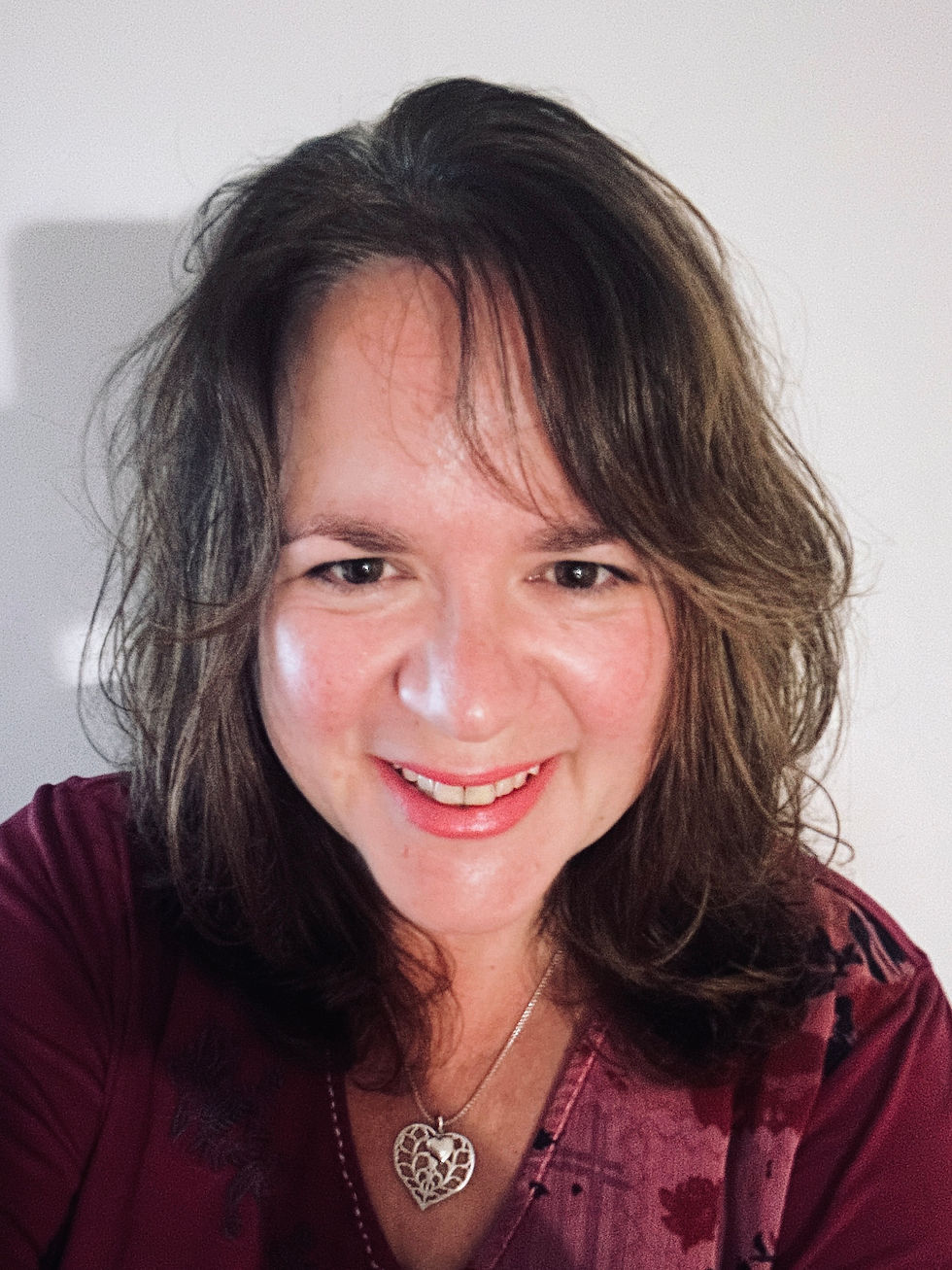
A chat with Alexandra Corrin-Tachibana about her poetry collection, Skinship (Salt, 2026)
How would you describe Skinship in one sentence?
Skinship is about relationships, intimate, familial, marital and between friends, against the backdrop of my relationship with Japanese culture, often through the prism of Japanese poetical forms such as zuihitsu, contemporary tanka and haibun.
How did you come up with the title?
I came across this Japanese-English fusion word whilst living in Japan for 10 years between 1996 and 2006.
It is sometimes used in the context of the intimacy of being naked together in the hot springs (whether with a partner or group of friends/ family members of the same sex), and I used the word in my debut collection, Sing Me Down From the Dark (Salt, 2022) in the poem, Photos, which serves as a preface to Skinship.
The word 'skinship' stuck in my head for being striking, humourous and poignant. Then, in 2023, when I wrote my first zuihitsu (running brush form) and was experimenting with various titles, I ended up naming my first ever zuihitsu poem 'Skinship'. This poem explored personal themes such as the experience of giving birth to my child in America and the processes around that, such as ‘kangaroo care’ where naked babies are put straight onto the mother’s chest in order to bond. However, in my experience, because of having some complications with the birth and needing a scheduled c-section, the father had to be the one to provide kangaroo care. The poem also featured friends bathing in the river together and a husband visiting ‘Soapland’, a brothel, ‘where women washed men’s bodies’.
Once this word appeared in what was to become my title poem, soon after that I decided it would be a great collection title. We feel everything through the skin, don’t we? The tingling goose pimples on our arms when we are excited. A shudder of fear, hair standing on end with rage, the deep flush of embarrassment. And this collection contains such a kaleidoscope of emotions and tones. Embedded in the word skinship is ‘kinship’ and there is much in the collection about relationships between parent and child and the impact of our DNA and family traits. I love the title! Can I say that?


Your first collection was Sing Me Down from the Dark, also published by Salt in 2022. How do you feel your work has evolved since?
As the writer, it feels a weird one to judge how my writing has evolved!
But I have become more experimental with form. I always loved exploring and inventing different forms and sought to create a variety of shapes on the page for the reader, and to exploit form to reiterate the content of a poem. In this collection, I have taken form further through including Japanese zuihitsu and, after quite a bit of research, experimenting with my own versions of zuihitsu, haibun, burning haibun and contemporary tanka.
I consider my voice stronger in this second collection, by which I mean there is no holding back, but also there is a darker humour and cynicism, whereas some of the humorous poems in the first collection were slightly fatuous! I have grown in confidence, and the second collection has several longer pieces than the first – so although both collections contain a similar number of poems, Skinship is 100pp, whereas Sing Me Down From the Dark was a slimmer volume of 80pp.
Other writers have been influential upon the second collection, particularly writers of Japanese heritage, partly because I have taught a lot of workshops on Japanese poetry in the last couple of years and of course, to teach well, you have to really know the materials. This knowledge and analysis of poems with my workshop groups has penetrated my own work and several poems in this collection are in conversation with other writers including Sei Shonagon, Kimiko Hahn, Fumiko Hayashi, and closer to home, the British-based writers Jennifer Wong and Laurie Bolger.
I am thinking out loud here, but I guess I was very aware of wanting a distinctive narrative arc in Skinship and of writing into gaps during the final stages of the manuscript. Although there was a clear narrative arc in Sing Me Down From the Dark, it was perhaps a little more imposed onto the poems, a sort of stringing together, whereas this second collection felt more organic. Links between poems were happening all the time and emerging naturally through the writing. Does that make sense?
I made the choice whilst writing the second collection to not only do research into Japanese poetry, but also to return to Japan twice, to explore how it felt returning after 15 years and as an older woman with a half-Japanese child. In other words, I set myself a challenge to explore, whereas I am not sure I had any such conscious strategy behind the debut, Sing Me Down From the Dark. I decided on the title Skinship early on and wrote into that.
Whilst in Japan recently, I explored my emotional connection to writers like Sei Shonagon and Fumiko Hayashi by visiting sites associated with the writers, such as Hayashi’s former homes in Onomichi, near Hiroshima, and Tokyo, as well as visiting an exhibition about Sei Shonagon and visiting Fushimi Inari Shrine in Kyoto, which Shonagon has written about. Skinship also has a more multi-lingual flavour than the first collection, and I pushed the boundaries with that including some untranslated kanji characters as well as a direct translation of a last email from a friend who had passed away, where I deliberately foregrounded the Japanese and the English became almost the second language.

You’re obviously hugely inspired by Japanese forms. How did your relationship with Japanese poetry come about? And do you have a favourite Japanese form?
I lived in Japan for 10 years and did a Masters through Sheffield University in Japanese Language and Culture in 2004. I was very into Japanese novels at that point and was diving into Japanese history and culture.
Exploring Japanese poetry in English was a conscious decision after my first collection; some of my poems in both collections relate to Japanese culture, it was the obvious next step! My favourite form is probably the zuihitsu; Skinship contains six in total, five longer poems and a short Sei Shonagon-inspired list style zuihitsu. I find the form liberating and a good vehicle for containing the threads of many different narratives and a variety of moods. And I have also received quite a bit of recognition for my zuihitsu, which makes me incredibly happy! 'Madam Gout' is shortlisted for the Forward Prize, for Best Single Poem-Written, 'Pillow Book Talk' won Verve Poem of the Month and 'Fieldnotes on Meeting up with my First Husband' won the Frome Festival Crysse Morrison Prize.
I also have a huge soft spot for the haibun, and like the way the haiku can either break the intensity of a block of full-on narrative rich prose, or distil and emphasise ideas in an even more concentrated way.
There are a few poems ‘after Yoko Ono’ – what is it about her that inspires you?
Her resilience perhaps as well as her experimentalism. Reading Grapefruit ‘Instruction Pieces’ and going to the Music of the Mind exhibition encouraged me to let go, take myself less seriously and be more bonkers in my own poetry. This injected a different mood into the collection and the scattered sequence after Yoko Ono feels like an amuse-bouche.
One of the many things that impresses me about your poetry, as well as the lyricism and careful crafting, is how honest and raw it feels, as if you’re peeling off a layer of yourself to reveal what’s underneath. It reminds me of Sharon Olds’ work in that respect. But at the same time, saying that a poem is ‘honest’ implies a biographical reading that isn’t necessarily helpful, as a poem is generally fictionalised to an extent. Do you worry about people taking your work literally?
I have worried about that, yes.
Many readers assume it is all true. But of course, there are different versions of the truth, stuff that is invented (especially the more surreal Ono-inspired poems) and parts of poems that have been embellished for drama or the narrative arc, or sometimes words and details are there for the soundscape and to support the semantic field.
I recently encountered the expression ‘autofictional poetry’ in Jonathan Taylor’s generous review of Skinship on Amazon. My poetry sits well within this category: it is a blend of truth and the autobiographical, with fiction and fantasy. For example, 'Izakaya' imagines what it will be like meeting a friend in Japan before the encounter actually happened, and 'For The One that Got Away', while it draws upon many aspects of the truth, also uses imagination and has been crafted in a certain way to make an impactful narrative and to be appealing lyrically.
There’s a narrative feel to the collection – a lot of the same characters recur. I wonder if you’ve thought of writing a novel or a collection of short stories on these or similar themes, or may do in the future?
I haven’t no. But never say never!
There’s a physicality to the collection – i.e., many references to bodies and faces – and I wonder if there’s a particular reason for that, and if this has some link to making the absent present, which also seems to be what many of the poems (perhaps all poems!) do?
Keeping things rooted in the body and sometimes also in fragments of actual dialogue, helps me remember and recreate scenes from the past. And of course, if you are trying to conjure up a person, then we do remember details like weak eyebrows, thick eyelashes, or what they wear, or perhaps features of their hands. I find it very organic to root poems in the body.
I like what you say Sam about using the body as a part of ‘making the absent present’. I think this was particularly the case with the character of Hiroshi (a friend now deceased) in my sequence about him, where I recall his hands on the chopsticks at the barbeque or holding Menthol Light cigarettes! And also, when I tried to recall Naomi and to imagine meeting her again (in 'Izakaya'). I remembered bodily things, like her ponytail and bare toes in Japanese slippers!

One of the poets I interviewed said that they imagined their reader as a woman, and I would say that I do as well. If you had to describe ‘your reader’, who would they be?
Like Sei Shonagon in The Pillow Book, my reader is a kind of confidante. Not necessarily a woman. In fact, I have been really pleased by the positive reaction to Skinship of three male reviewers of my book so far- James Hartley in The Madrid Review, Will Mackie for New Writing North and Jonathan Taylor on Amazon.
Do you have any tips for poets wanting to get published?
Work hard on your poems and enjoy the process of writing and editing. If you focus on the process, then the product will take care of itself. Don’t become obsessed about how many poems you publish: care more about the quality of what you put out. Try not to become distracted or unsettled by what others seem to be doing. Shut out the noise and take breaks from social media. Find your unique selling point and read what you love and write about what you feel you need to say.
Don’t be afraid to send out to magazines, keep going and don’t let others put you off. Trust your instincts and think carefully about who to trust with your writing in terms of poetry exchanges and feedback groups. Consider working with a mentor; which, with the right one for you, could be a game changer and gives you accountability if you procrastinate or suffer from imposter syndrome.
If you could have had a blurb for this collection from anyone, living or dead, who would it be and why?
I already have exactly the people I want on the back of my book.
Jennifer Wong because I have long been a fan of her work and read all of her pamphlets and collections. I enjoy her international perspective, her exploration of being both insider and outsider living abroad, and her multilingualism- she has showed me a lot about what poems can do, and I also greatly admire her emotional range, experimentalism, and the level of honesty in her poems about topics such as mother and daughter relationships.
Rory Waterman. His blurb means so much because I did not know him when I approached him. I just knew how well he articulated my poem ‘Haibun for the One That Got Away’ in his judge’s report, when he commended it in the 2025 Buzzwords competition. I thought, wow, he really gets my writing; I would love his words about the whole collection. I deeply respect the fact that he said he would read first and then decide whether or not to endorse Skinship. So happy that he did.
And Rebecca O’ Connor has supported me from the outset, publishing several of my poems in The Moth, a magazine which I absolutely adored for both its writing and incredible artworks and interviews. Rebecca has really felt like a part of my journey and I wanted to acknowledge that by having her words on the back.
If I was looking for an international endorsement, then probably Kimiko Hahn!
And if it was someone dead, then definitely Sei Shonagon!

What’s been the reaction to the collection so far?
It has been incredible. In less than two weeks of official publication, Skinship has gone into its second print run! And one of the poems is going to be translated into Romanian, which is amazing.
I am hugely grateful for all the precious personal messages from readers as well as early, very positive reviews from James Hartley in The Madrid Review, Sue Wallace Shaddad, in London Grip and Will Mackie, in New Writing North, as well as a feature spot on Fokkina McDonnell’s Acacia Publications blog. And I am completely bowled over by the fact that the book is being sold in Tokyo’s famous English Language bookstore, Kinokuniya. A dream come true!
People are writing to me that it is a page-turner, reads like a novel, and that they have read it in one sitting. I have also had people approach me at readings to ask if they can review the book, which is absolutely lovely. I couldn’t be more grateful. Pinching myself.
Have you any future readings or other events planned to promote the book?
Complex International Families for the Bury St Edmunds festival with Mary Mulholland and Sue Wallace-Shaddad:
York Poetry Pharmacy on October 15th, for the joint York launch of Mary Mulholland’s The Dodo Stories from Nine Arches and Skinship:
Reading at the 2026 Forwards Prize ceremony, at The South Bank Centre, on October 24th as one of the shortlisted poets for Best Single Poem-Written:
Glasgow Mirrorball reading with Todd Turner, Ryan Van Winkle, and Carol McKay on October 29th
Milton Keynes Lit festival online, December 3rd
Buy the book here
Also available at Amazon (where you can read several reviews) & Waterstones:


Comments